2025 compact plant
1.1 kW auxiliary116 kW electrical
Developer data for the household-scale generator. Auxiliary power holds the vacuum; the implosion motor drives the alternator.
SGVGWEBER S.L. · Tenerife · Chile engineering
The Strong Gravity Vacuum Generator converts the pressure difference between the atmosphere and a stable 0.001 mbar vacuum into rotary work — then electricity. No combustion. No chemical fuel. Built to run for a lifetime.
01 — Principle
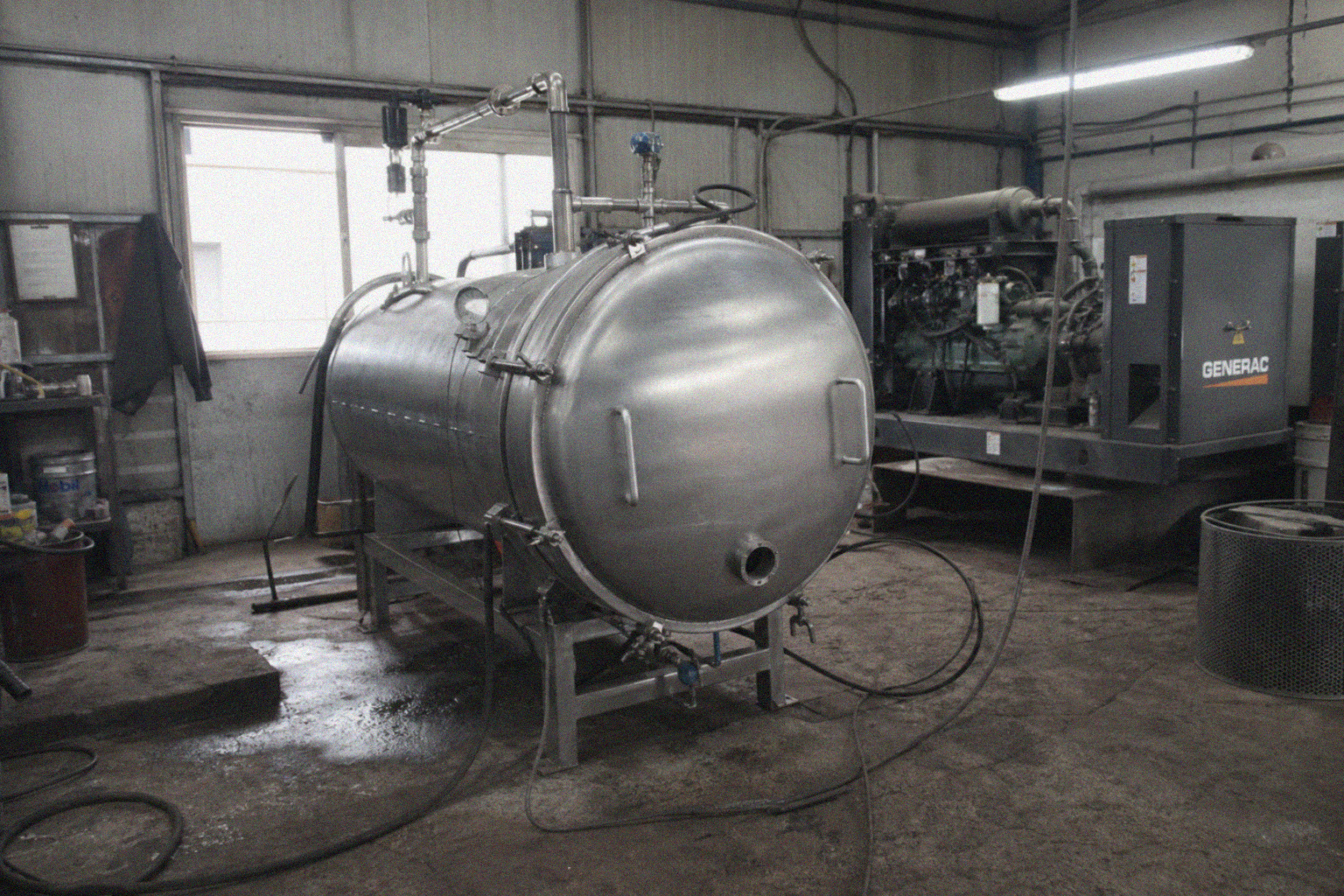
A hermetic tank is held at 0.001 mbar. When a cylinder is opened to that tank, outside air — one bar of unrelenting pressure — drives the piston. The motor does not explode. It implodes. Heat stays low. The loudest sound is the hiss of the vent valves.
1.0 bar against 0.001 mbar is a permanent, planetary resource. The machine only has to keep the vacuum honest.
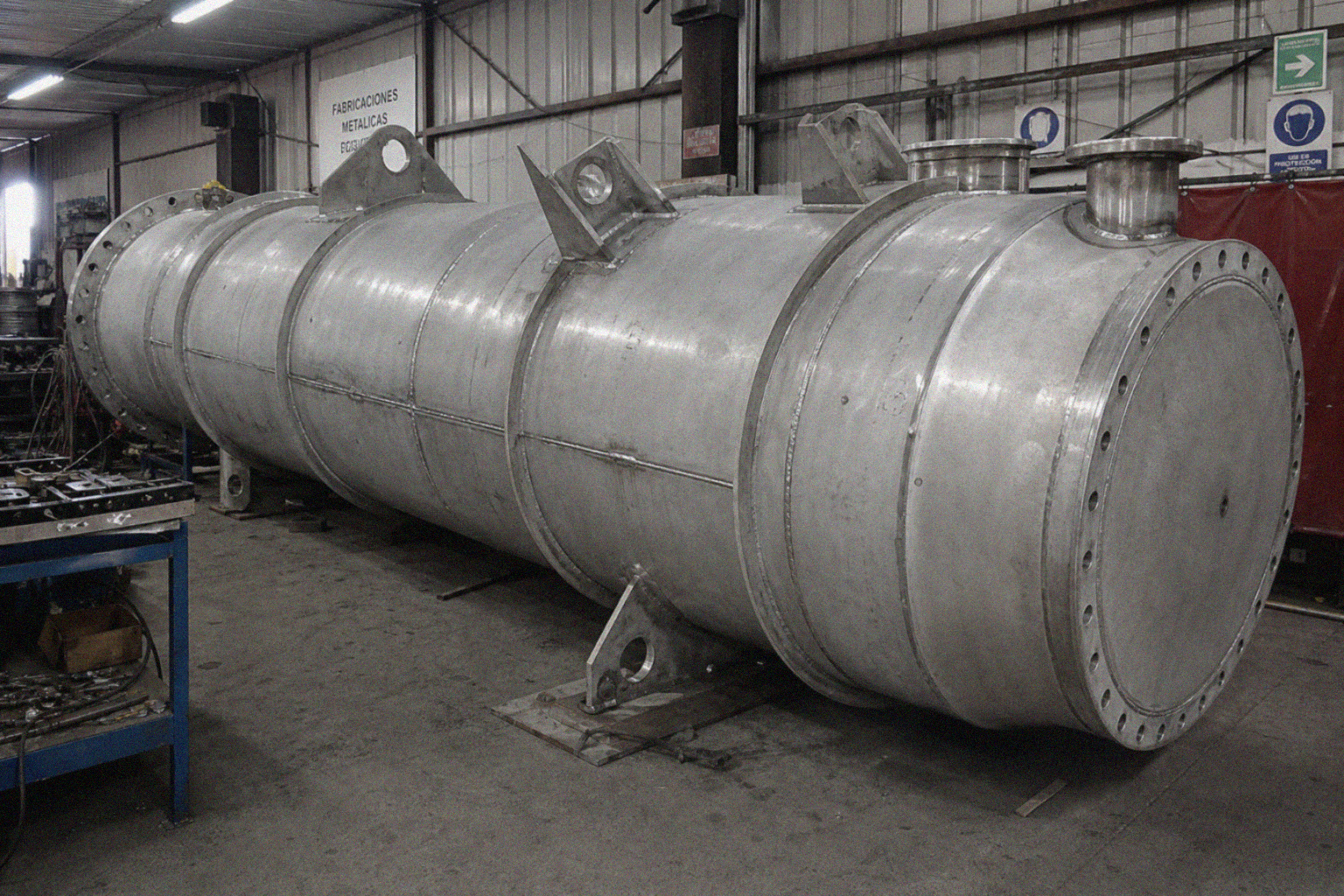
A 54 m³ industrial windkessel — or a 3 m³ 2025 compact vessel — smooths the pulse of twelve cylinders so force does not hunt.
Pistons run on vacuum alone. No soot, no exhaust chemistry, minimal lubrication. Cool running, clean internals.
02 — Prototype
Before the Tenerife series path, the programme ran a working implosion plant in Chile. This is that machine: a 20 kW/h prototype on the floor — vacuum tank, motor, and generator in one train. Watch the hardware, then read the architecture that scales it.
03 — Architecture
Industrial Leybold RUVAC WA/WAU pumps hold the vacuum 24/7. A DN150 stainless manifold feeds an overhead rotary valve shaft — the brain of the motor — timed 1:1 to the crank by an HTD belt. Short vacuum paths. Full 115 kgf on the piston the instant the slot opens.
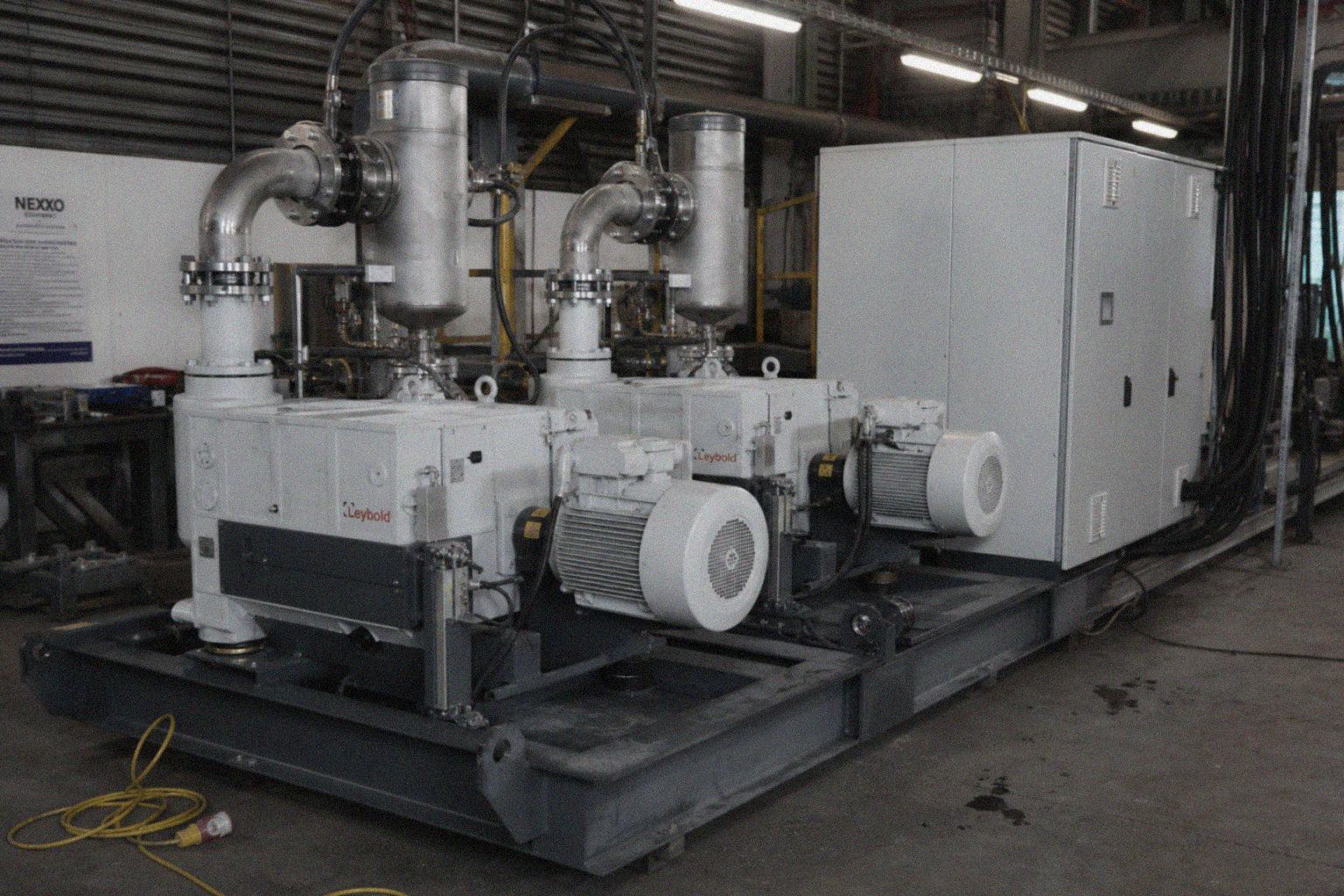
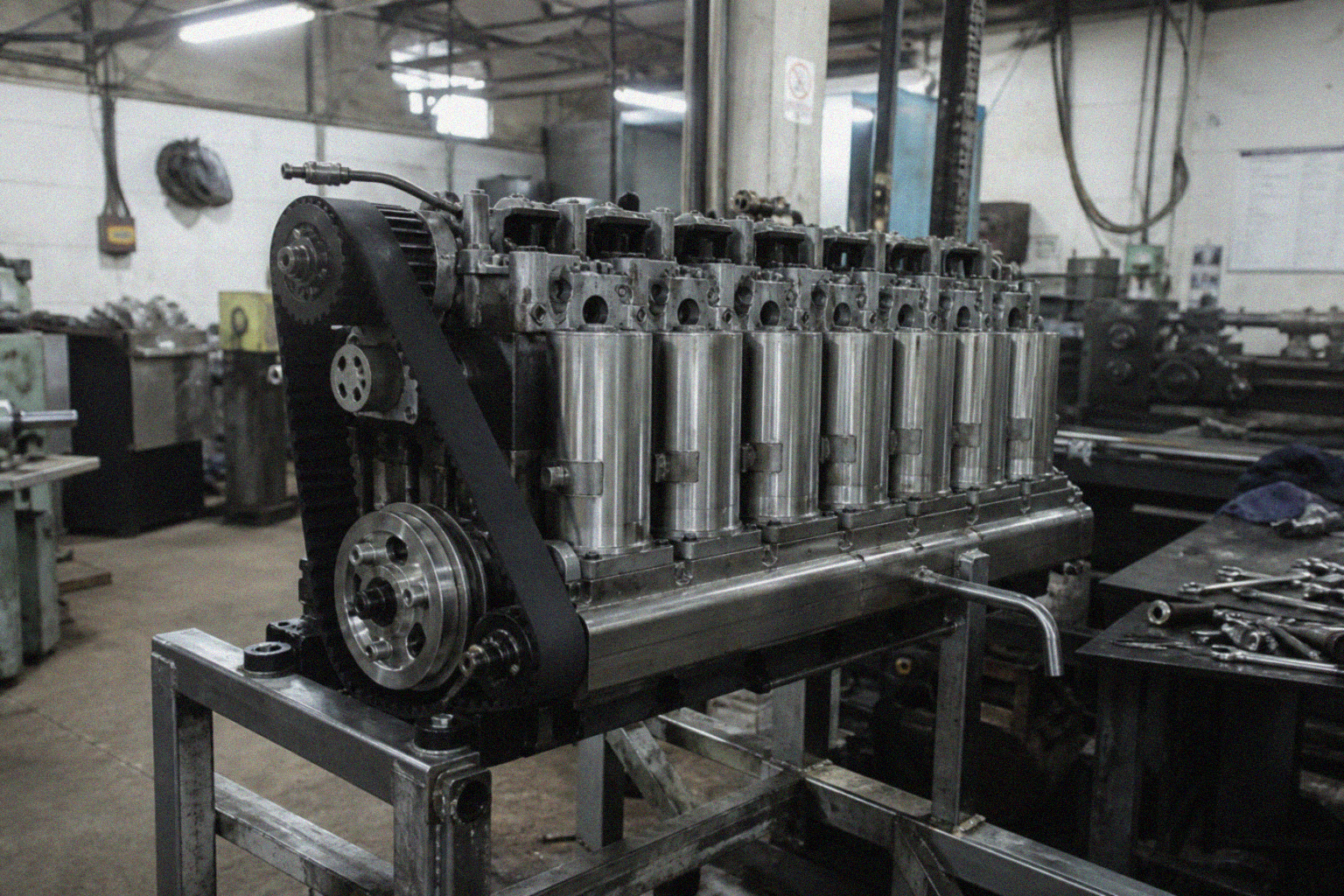
If vacuum stayed on the piston, the engine would lock at bottom dead centre. The rotary shaft therefore has two ports per cylinder: vacuum for the work stroke, atmosphere for the free return. Rectangular slots dump full cross-section in a millisecond. Graphite or PTFE seals keep false air out of a 270 kW-class suction train.
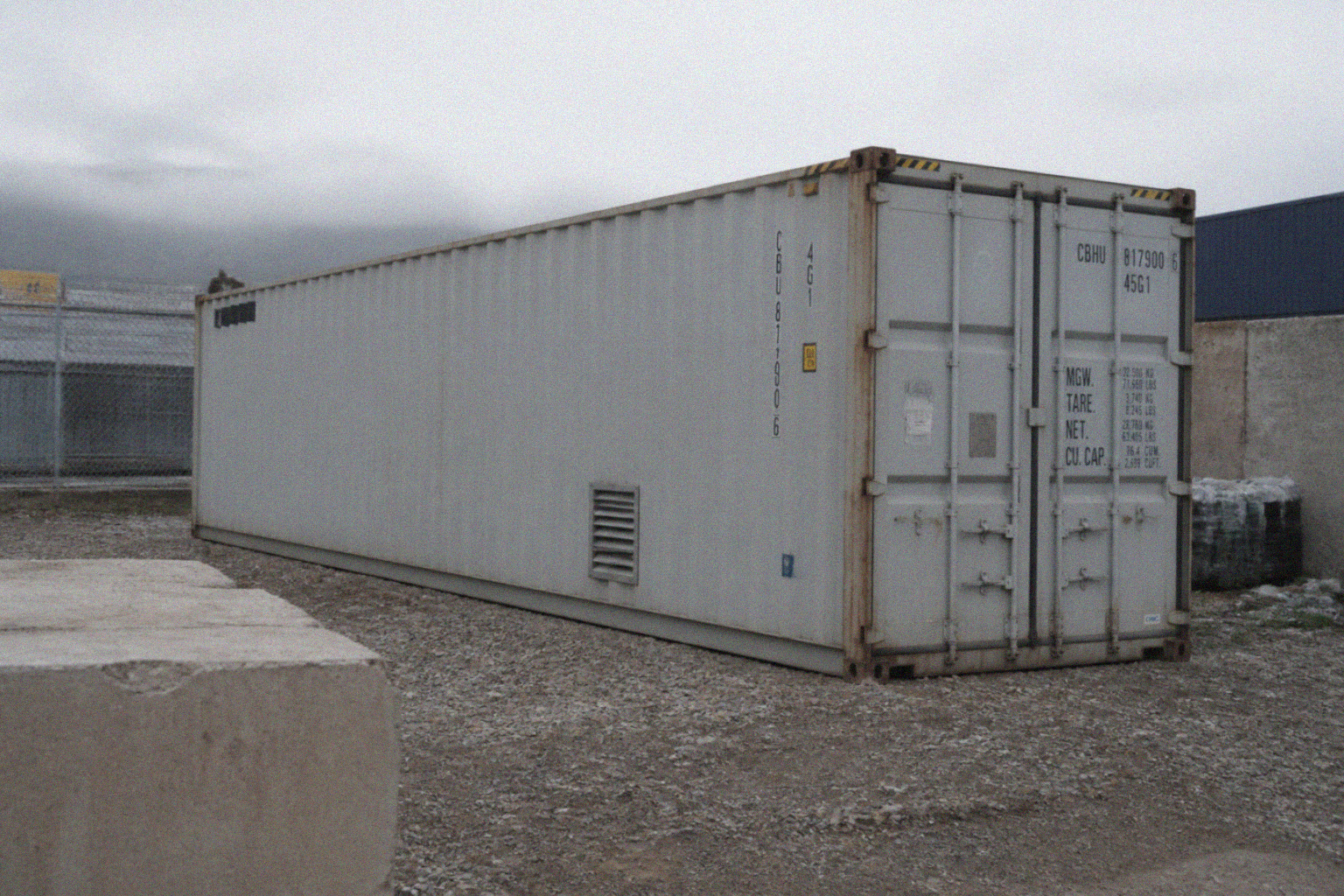
Layouts in the programme: inline, V, star distributor, and single-piston demonstrators. The production intent is a twelve-cylinder implosion motor in a 20- or 40-foot container.
04 — Performance
Figures below are developer performance data from the 2008–2025 programme. Series plants are offered with technical acceptance by Bureau Veritas before final payment.
Working vacuum
0.001mbar
Atmosphere
1.0bar
Cylinders
12× 12 cm
Piston force
115kgf / cyl.
Manifold
DN150stainless
Buffer tank
54m³ industrial
2025 compact plant
1.1 kW auxiliary116 kW electrical
Developer data for the household-scale generator. Auxiliary power holds the vacuum; the implosion motor drives the alternator.
Industrial pump train
High-capacity vacuum270 kW class
Sized so twelve 12 cm cylinders do not starve at speed. Constant force under load, water-cooled pump, industrial three-phase start.
05 — Dual yield
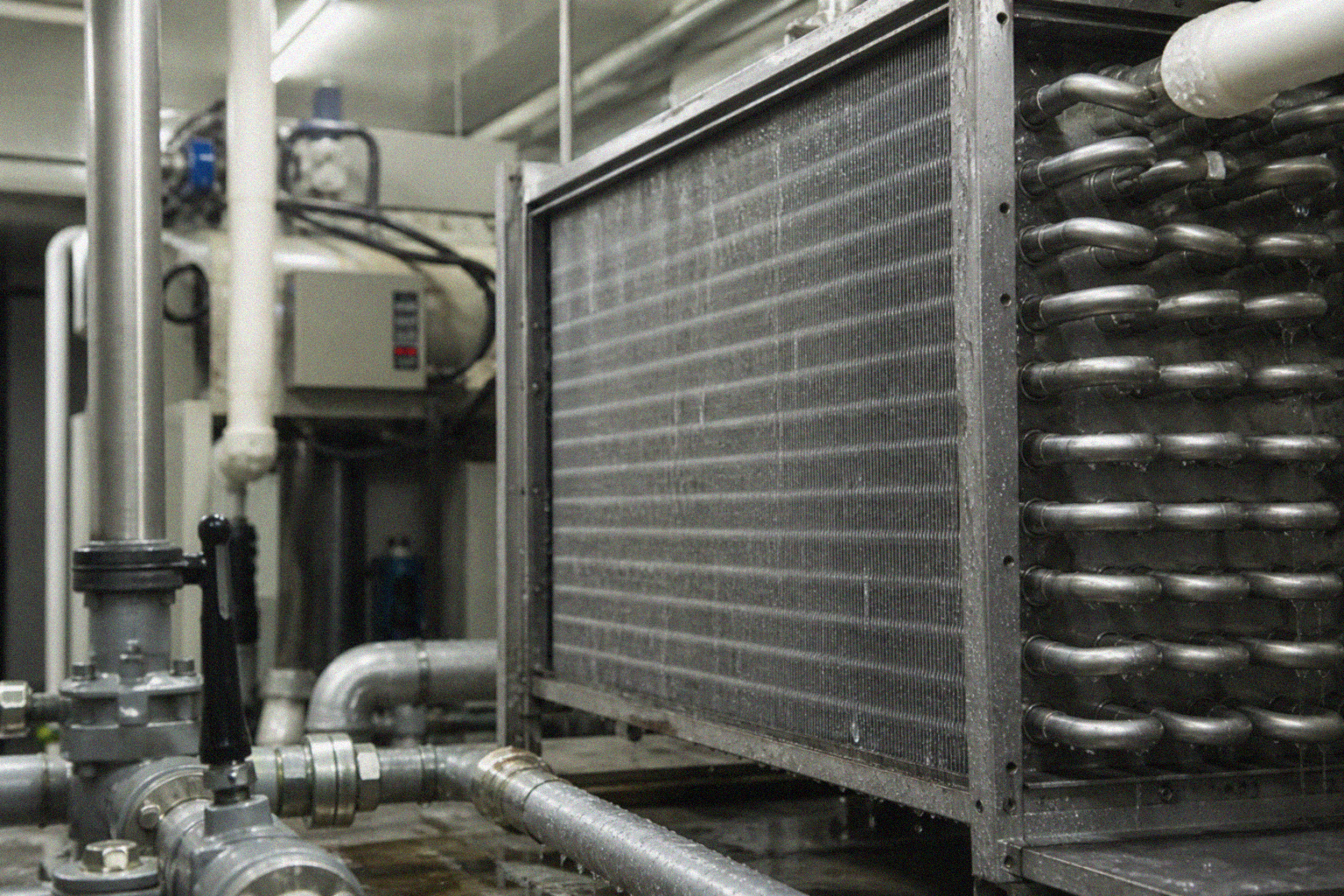
Plants scale from about 100 kW — twenty households — to multi-megawatt industrial islands. An optional atmospheric water module is specified at up to five tonnes of drinking water per day, or more on larger trains.
≤ 5 t / day
Drinking water from air · paid option
06 — Programme
2008
Wolfgang Dieter Weber opens the gravity-vacuum programme. Early plants use large flywheels and a 54 m³ tank.
Chile
A working prototype is built in Chile — vacuum tank, implosion motor and generator on one floor. Film of that machine is on this site.
RUVAC
German Leybold pumps take the duty. Four-year manufacturer backing. Flywheels retired — pistons run on vacuum alone.
2025
Compact 3 m³ tank option. Container plants. Manufacturing intended in Tenerife under SGVGWEBER S.L., with Chile engineering roots.
07 — Capital
Capital is sought to complete series manufacturing in Tenerife — ZEC tax regime at 4%, nineteen modern industrial parks — and to put plants on Bureau Veritas acceptance. Equity, or a turnkey generator with a stake in the company.
Path A · Equity
Participate in the Tenerife production company. Access to Canary Islands industrial infrastructure and the ZEC framework. For investors who want the platform, not only a single container.
Path B · Plant + 10%
A containerized plant, built in Tenerife by the programme team, plus a 10% participation. Final tranche after Bureau Veritas technical acceptance — not before the machine is signed off.
An alternate Chile build path exists (Coquimbo, Bureau Veritas laboratory on site, 6–8 month delivery). Structure and pricing are confirmed in briefing — figures on this page follow the Tenerife investment memorandum.
08 — Briefing
Wolfgang Dieter Weber and the SGVG team take qualified conversations by Zoom or in person. Bring load profile, site, and capital range. We will bring the vacuum train, the valve shaft, and the acceptance path.
Inventor · Wolfgang Dieter Weber